
If you live in Orlando, you already know the drill. By nine in the morning the air feels thick enough to chew, and by the afternoon your dashboard thermometer is flirting with triple digits. Your car’s air conditioning isn’t just a comfort feature here, it’s the only thing standing between you and a miserable commute. So when it starts blowing warm air, or takes longer than it used to actually get cold, that’s not bad luck. It’s usually the direct result of what Central Florida summers do to a vehicle’s cooling system over time.
Most drivers only start paying attention to their AC once it’s already struggling, and by then the problem has often been building quietly for weeks or months. Orlando’s particular blend of heat and humidity is tougher on a car’s cooling components than what drivers in drier states typically deal with, which means the timeline from first warning sign to full failure can move faster here than people expect.
The Difference Between Heat and Humid Heat
A car AC system built for a dry climate can get away with a little wear and tear. Orlando doesn’t offer that luxury. The combination of high heat and high humidity means your AC compressor isn’t just cooling air, it’s constantly working to pull moisture out of it too. That’s a heavier workload than most systems see in other parts of the country, and it adds up over months of daily driving.
Refrigerant lines take a beating in this climate as well. Rubber seals and hoses expand and contract with the heat, and over time that constant flexing creates tiny cracks or weak points where refrigerant slowly leaks out. You won’t notice it happening. You’ll just notice that your AC feels a little less cold than it did last summer, and then a little less cold than that. Add in the intense UV exposure that comes with a Florida summer, and rubber components age faster than they would in a milder, cloudier climate. It’s a slow process, which is exactly why so many drivers don’t catch it until the system is already struggling.
Warning Signs Most Drivers Ignore
A few symptoms tend to show up before a full breakdown, and they’re easy to write off as normal Florida weather being, well, Florida weather.
- Air that’s cool but not cold, especially at highway speed
- A compressor that cycles on and off more than usual
- A faint burning or musty smell when the AC first kicks on
- Longer wait times for the cabin to actually cool down
- A hissing or clicking sound coming from under the hood when the AC is running
Any one of these on its own might not seem urgent. Together, they’re usually a sign that refrigerant levels are low, a component is starting to strain, or moisture has worked its way somewhere it shouldn’t be. Drivers often assume the car just needs a break, or that the AC is naturally weaker in extreme heat. In reality, a properly functioning system should keep pace even on the hottest days of the year. If it’s falling behind, something inside the system is already working harder than it should.
Why Waiting It Out Backfires
Here’s the problem with putting off an AC checkup in Orlando. Heat doesn’t just affect comfort, it affects the compressor’s workload directly. A compressor already running low on refrigerant has to work harder to produce the same amount of cooling. Run that compressor hard enough, for long enough, in 95 degree heat, and you’re looking at a part that fails completely instead of one that simply needed a refrigerant top off or a resealed line.
There’s also a knock on effect worth mentioning. An AC system under strain puts extra load on the engine, particularly at idle or in stop and go traffic, exactly the kind of driving Orlando’s roads are famous for. Combine that with high ambient temperatures and you’ve got one of the more common paths to a car overheating in Orlando traffic, not just an uncomfortable ride. What starts as a minor AC issue can end up affecting engine temperature, fuel efficiency, and in some cases lead to a roadside breakdown during the worst possible time of day.
Why On Site Diagnosis Makes Sense Here
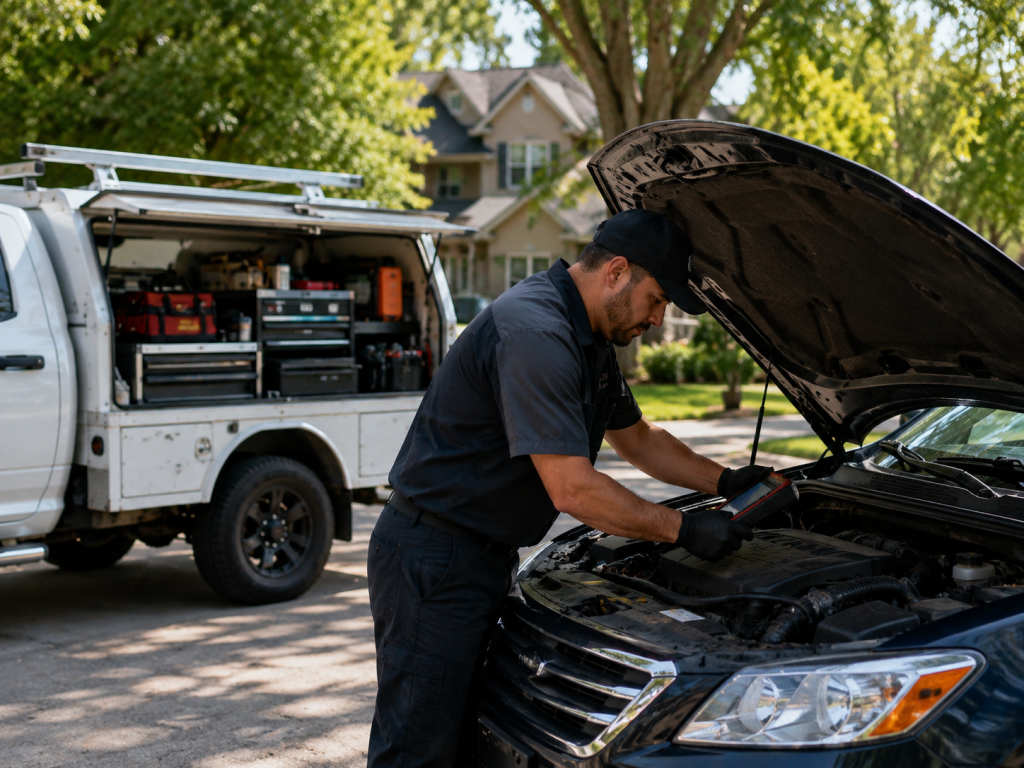
This is where a mobile mechanic in Orlando has a real advantage over a traditional shop visit. AC problems are diagnosed with the system running under real conditions, engine on, compressor engaged, refrigerant pressures reading true to how the car actually operates during a Florida afternoon. A car that’s been sitting in a cool shop bay doesn’t always tell the same story. In fact, this is one of the biggest reasons Orlando drivers are choosing mobile mechanics over traditional shops for issues like this.
Having a mobile AC repair technician come to your driveway or office parking lot means the diagnosis happens exactly where and when the problem shows up. There’s no need to schedule around a shop’s hours, sit in a waiting room, or drive a car that’s already struggling with the heat across town. A trained technician can check refrigerant pressure, inspect the compressor and lines for leaks, and often make the repair on the spot, before a small issue turns into a stranded car and a much bigger bill. If you’re weighing your options, it’s worth reading why mobile mechanics are better than traditional auto shops in Orlando before your AC gets any worse.
On site service also means less time spent worrying about the car overheating on the way to an appointment, since the diagnosis and repair happen right where the vehicle already is.
Simple Ways to Protect Your AC System Between Checkups
A few habits can help slow down the wear that Orlando’s climate causes, even though they won’t replace a proper inspection when something feels off.
- Run the AC for a few minutes every week, even in cooler months, to keep the compressor seals lubricated
- Park in shade or use a windshield sunshade to reduce cabin heat buildup
- Avoid blasting the AC on the highest setting the moment you start the car, giving the system a moment to build pressure gradually
- Get refrigerant levels checked once a year, ideally before peak summer heat arrives
None of these steps eliminate the need for a professional look at the system, but they do reduce the extra strain that speeds up wear in a hot, humid climate like Orlando’s.
Orlando’s summers don’t give car AC systems any room for slow leaks or worn out compressors to go unnoticed. The heat and humidity accelerate wear that would take years to show up somewhere with a milder climate. Catching the early signs, weaker airflow, longer cooldown times, a compressor working overtime, and getting a proper on site inspection is the difference between a quick refrigerant recharge and a full AC system replacement in the middle of July.
If your car’s AC hasn’t felt right lately, visit our Apex Mobile Mechanic Orlando homepage to see our full range of services, or head straight to our contact us page to book an on site AC inspection before the next heat wave puts it to the real test.